The Great Patio Debate
When planning a new patio, one of the biggest decisions you'll face is choosing between porcelain and natural stone. Both materials have their merits, and the right choice depends on your priorities, budget, and garden style.
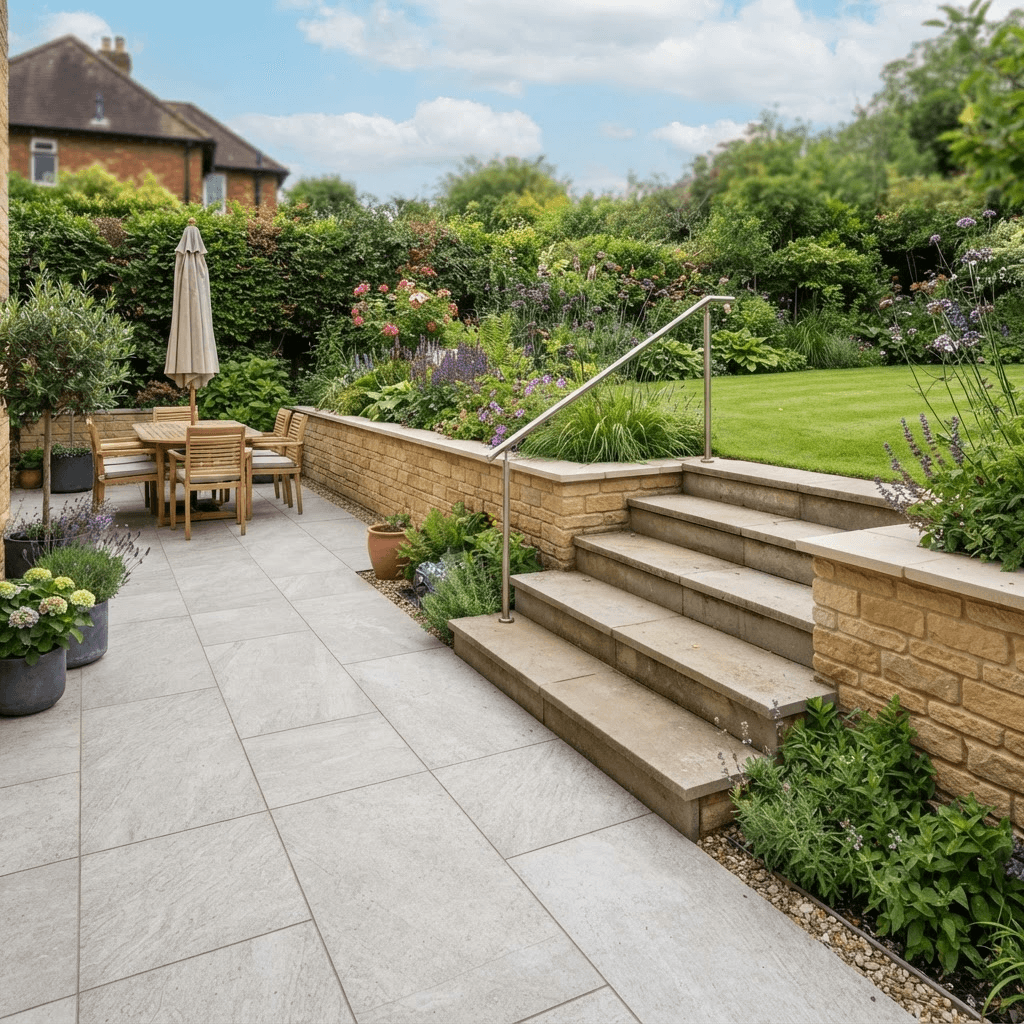
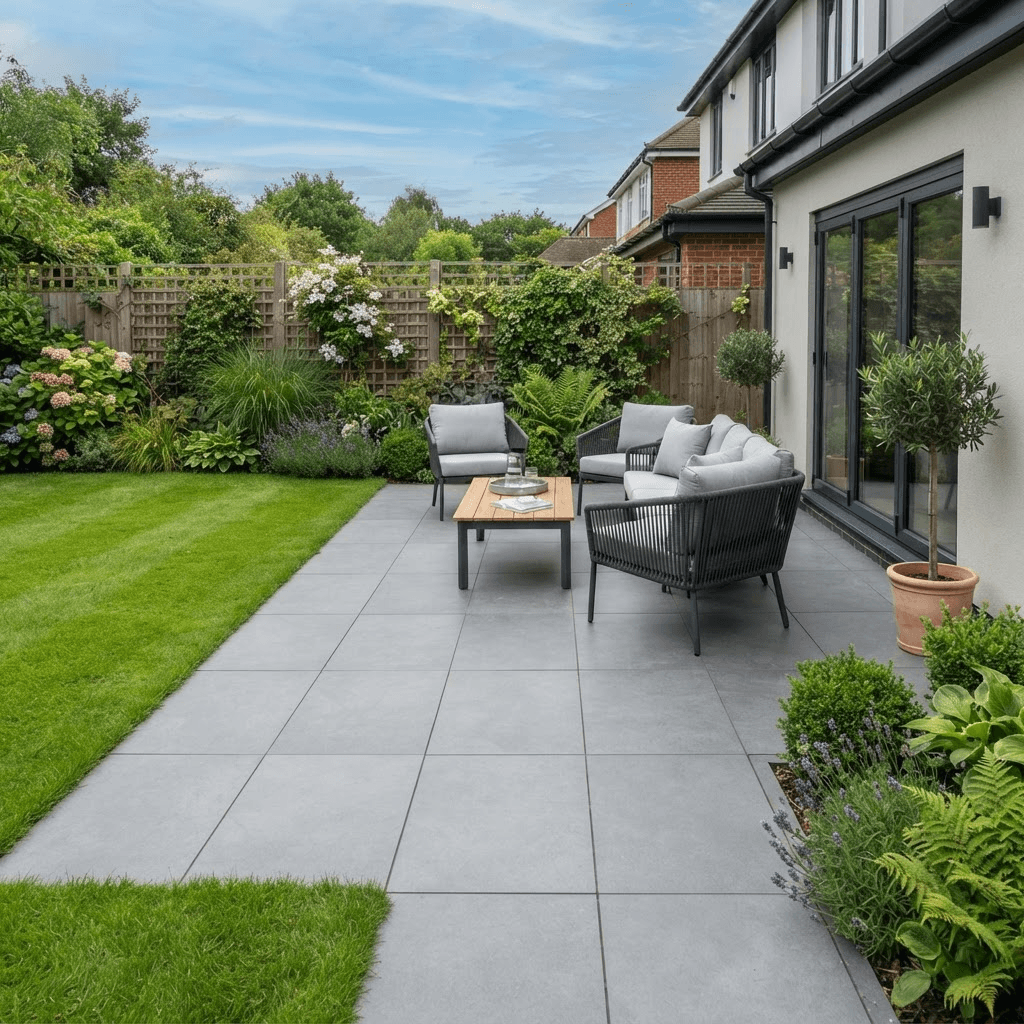
Porcelain Paving: The Modern Choice
Porcelain has become increasingly popular in recent years, and for good reason:
Advantages:
- Low maintenance - Porcelain is virtually non-porous, meaning it resists stains, moss, and algae far better than natural stone
- Consistent appearance - Each slab looks uniform, perfect for contemporary garden designs
- Durability - Extremely hard-wearing and frost-resistant
- Easy to clean - A simple jet wash keeps porcelain looking pristine
Considerations:
- Higher upfront cost than some natural stones
- Can look too uniform for traditional settings
- Requires careful laying on a full mortar bed
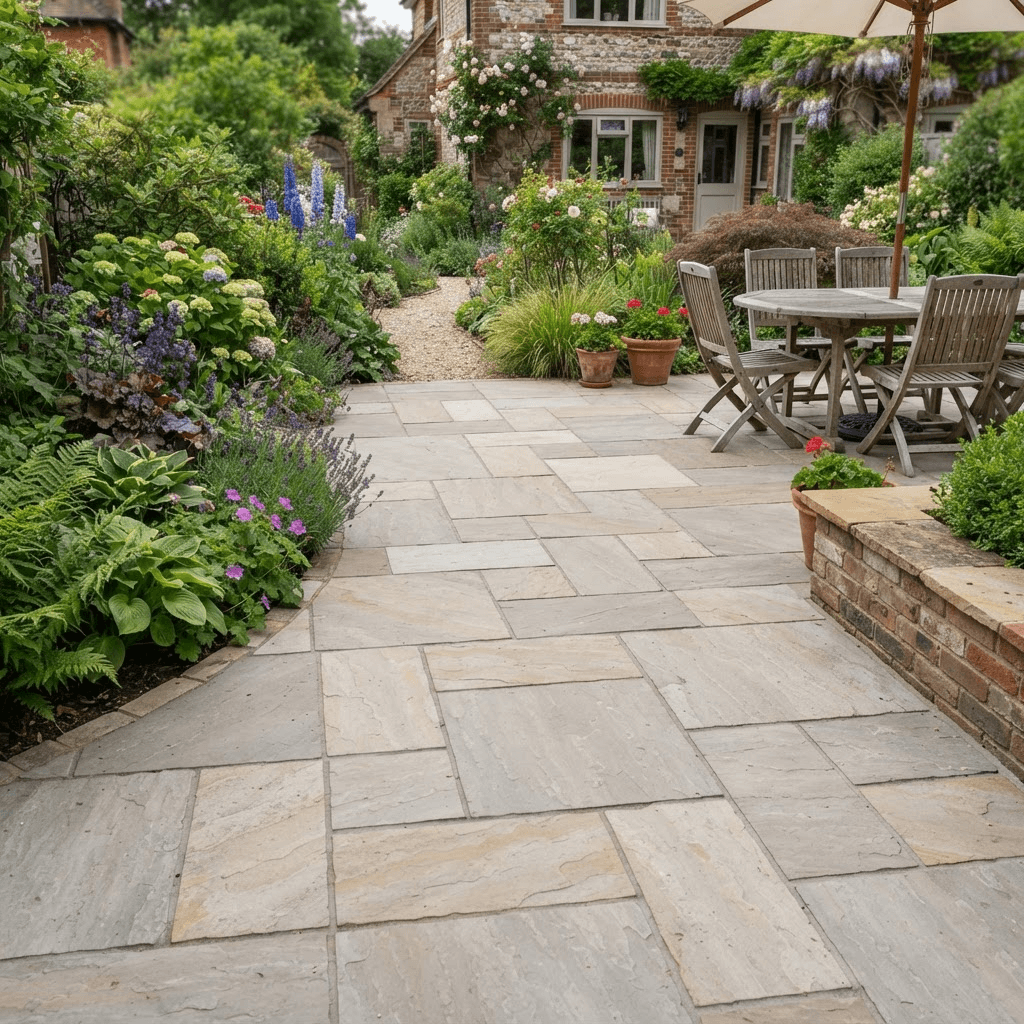
Natural Stone: Timeless Character
Indian sandstone, limestone, and slate remain popular choices for their authentic appeal:
Advantages:
- Natural beauty - Every slab is unique with natural variations in colour and texture
- Traditional feel - Suits period properties and cottage gardens perfectly
- Cost-effective - Indian sandstone in particular offers excellent value
- Improves with age - Develops a weathered patina over time
Considerations:
- Requires sealing for best results
- More porous, so needs regular cleaning
- Colour variations can be unpredictable
Our Recommendation
For most Buckinghamshire gardens, we typically recommend porcelain for its combination of durability and low maintenance. However, if you have a period property or prefer a more rustic look, natural stone can be the perfect choice.
The best approach? Get in touch for a free consultation. We'll assess your garden, discuss your preferences, and recommend the material that will work best for your specific situation.